
Speakers

Guest of Honour

The Hon. Paul CHAN Mo-po, GBM, GBS, MH, JP

Financial Secretary
The Government of the Hong Kong Special Administrative Region

Keynote Speakers
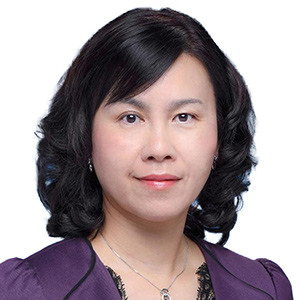
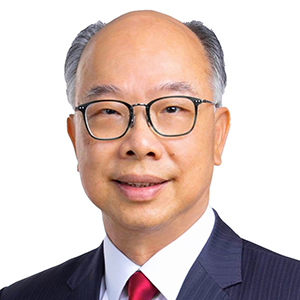
Ms Mable CHAN, JP

Secretary for Transport and Logistics
The Government of the Hong Kong Special Administrative Region
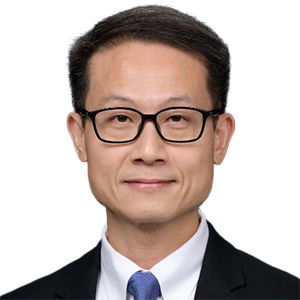
More
Ir Tony YAU, JP

Director of Highways
The Government of the Hong Kong Special Administrative Region
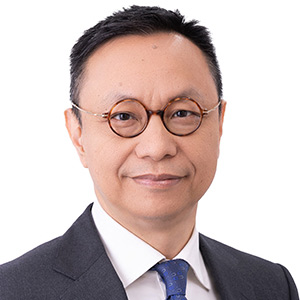
More
Mr Darryl CHAN, JP

Deputy Chief Executive
Hong Kong Monetary Authority

More
Ir HON Chi Keung, GBS, JP

Chairperson
Building Technology Research Institute

More

Speakers

(In alphabetical order of surnames in English)
Mr Rachid Annan

Technology Business Line Director
VSL International Limited

More
Mr Jens-Peter Brauner

Chief Executive Officer
Siemens Mobility Hong Kong

More
Ir Kenneth CHAN

Member
Board of General Executives, China Civil Engineering Society (Bridges and Structural Engineering)

More
Prof CHEN Xiangsheng

Member
Chinese Academy of Engineering

More
Ir Dr Bruce CHONG

Fellow and Director (City Advisory, Climate Change & Urban Sustainability)
Arup

More
Mr Carl Devlin

Capital Works Director
MTR Corporation Limited

More
Mr HUANG Yongjin

Director of Overseas Business, Smart Transportation BU
Huawei

More
Mr Russell Jackson

Executive Vice President, Global Transit Director
AECOM

More
Ar LAU Man Kwan, Julia, JP

President
The Hong Kong Institute of Architects

More
Prof LI Hui

Member
Chinese Academy of Sciences

More
Prof LIU Jiaping

Member
Chinese Academy of Engineering

More
Mr David MACKENZIE

Senior Technical Director
COWI UK Limited

More
Mr NING Jinjin

Vice Chief Engineer, Deputy General Manager
CCCC First Harbour Engineering Company Limited

More
Univ.-Prof Dr.-Ing. habil. Markus OESER

President
The Federal Highway Research Institute (BASt)

More
Prof Wei PAN

Head, Department of Civil Engineering
The University of Hong Kong

More
Prof B.F. Spencer Jr.

Nathan M. and Anne M. Newmark Endowed Chair in Civil Engineering
University of Illinois

More
Mr WANG Shilin

Senior Technical Director
Shanghai Municipal Engineering Design Institute (Group) Co., Ltd (SMEDI)

More
Mr WANG Shuiyin

Vice President
Research Institute of Highway Ministry of Transport

More
Mr Jason WONG

Director & Group Leader
Arup

More
Mr XU Jun

Vice Chief Engineer
CCCC Highway Consultants Company Limited

More
Mr YANG Weidong

Chairman
China Design Group Corporation Limited

More

Moderators

(In alphabetical order of surnames in English)


Ir BOK Kwok-ming, Aaron

Past President
The Hong Kong Institution of Engineers

More
Ir Albert CHENG

Executive Director
Construction Industry Council

More
Ir Henry CHEUNG

Chairman
Association of Hong Kong Railway Transport Professional

More
Ir Victor CHEUNG Chi-kong

Co-Managing Director
J. Roger Preston Limited

More
Mr KAN Jun

Council Member
Construction Industry Council

More
Mr KUNG Wing Chuen, Francis

Managing Director
Meinhardt Infrastructure and Environment Limited

More
Ir Rupert LEUNG

Vice President
The Hong Kong Institution of Engineers

More

Panelist

Ir Eric MA Siu-cheung, GBS, JP

President
The Hong Kong Institution of Engineers

More

Mr Jens-Peter Brauner

Chief Executive Officer
Siemens Mobility Hong Kong

Jens-Peter is an expert in the transportation sector for 30 years and a Fellow of IET.

He has degrees in electrical engineering and economic psychology, because for him, technology and people belong together, especially when it comes to digital transformation and the application of artificial intelligence.

By living and working throughout Europe, America and Asia, he became passionate about diversity and leveraging cultural synergies for the development of disruptive innovations.

As the CEO of Siemens Mobility in Hong Kong, he is working with his team and local partners to turn Hong Kong into a sustainable and smart city.

Holding patents by himself, he is always looking for bright ideas and supports talents and their visions. And still today he is dealing with latest technologies and is using AI for developing apps by himself, just for fun.

Abstract of Presentation

With the increasing demand for more efficient, reliable, and sustainable mobility along the long-term development roadmap of Hong Kong, innovative, digital and AI-powered mobility solutions play a key role in driving the transformation. The presentation will shed light on how we can make the future of railway operations and maintenance in Hong Kong smarter and more sustainable with latest cutting-edge solutions.


Mr HUANG Yongjin

Director of Overseas Business, Smart Transportation BU
Huawei

Since joining Huawei in 2003, Mr Huang Yongjin has worked in several countries and business domains, including the North-Latin America Region, Latin America Region, and Enterprise BG. He has held several positions, including Regional Partner Director, Regional Industry Director, Country Enterprise President.

Mr Huang Yongjin is currently the director of Smart Transportation BU overseas business. He oversees business strategy planning, solution design/development, partner development, sales, and services for the comprehensive transportation/logistics industry. It is serving customers in over 170 countries and regions, including those in port, airport, customs, railway, road, waterways, urban rail, urban transportation, and logistics.

Abstract of Presentation

The intelligent era of urban transportation has arrived. ICT technologies such as AI, Big Data, cloud, and the Internet of Things (IoT) are being integrated into urban transportation governance more quickly and deeply.

With these technologies, they are adopted for refined situational awareness of road networks and traffic hubs, quick response to incidents, unified signal control, and comprehensive monitoring for road facilities. Since the platform level, AI enablement, data enablement, and business enablement are used to build various professional models to achieve cross-region, cross-department, cross-domain, and cross-transportation models integration and interconnection.

Through in-depth digital enablement, a comprehensive operation management system is built to transform traffic management from passive response to proactive control, improve road capacity and efficiency, and bring a safer and more convenient travel experience to citizens.

Ir Tony YAU, JP

Director of Highways
The Government of the Hong Kong Special Administrative Region
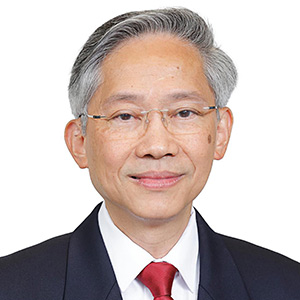
Ir Yau graduated from the Department of Civil Engineering of the University of Hong Kong and is a fellow member of the Hong Kong Institution of Engineers. He joined the Government of the HKSAR in 1998 and has served in Highways Department, Transport Department and Water Supplies Department participating in a wide range of engineering infrastructure and development projects (including Western Harbour Crossing, Deep Bay Link, Retrofitting Noise Barrier projects, Central Kowloon Route, Tseung Kwan O Desalination Plant and In-situ Reprovisioning of Sha Tin Water Treatment Works). He was the Assistant Commissioner for Transport and the Deputy Commissioner for Transport from 2019 to 2021 and from 2021 to 2022, respectively, then appointed as the Director of Water Supplies from 2023 to 2024 before taking up the post of the Director of Highways in March 2024. Ir Yau formulated the Smart Mobility Roadmap, mapped out strategic road infrastructures under the “Strategic Studies on Railways and Major Roads beyond 2030”, oversaw the implementation of “Total Water Management Strategy” and Water Intelligent Network. Ir Yau is now responsible for the continuous enhancement of Hong Kong's public road network, undertaking the planning, design and construction of road projects such as the Central Kowloon Route, Hiram’s Highway Improvement Stage 2, Route 11, and the Northern Metropolis Highway, maintaining and ensuring the existing public road facilities in safe and serviceable condition, reviewing Hong Kong's Railway Development Strategy and supervising the implementation of new railway projects such as the Tung Chung Line Extension, Tuen Mun South Extension, Hong Kong-Shenzhen Western Rail Link, Northern Link as well as the new Smart and Green Mass Transit in East Kowloon.

Ir Yau has vast experience in the construction field before joining the Government. He worked for global consulting and contractor firms and also the Mass Transit Railway Corporation Ltd overseeing mega engineering projects.

Univ.-Prof Dr.-Ing. habil. Markus OESER

President
The Federal Highway Research Institute (BASt)

Univ.-Prof Dr.-Ing. habil. Markus Oeser has led the Institute of Highway Engineering at RWTH Aachen University since 2011 and has served as Dean of the Faculty of Civil Engineering since 2015. A graduate of TU Dresden, he earned his doctorate in 2004 and habilitation in 2010, specializing in non-linear numerical simulations in transportation engineering. His expertise includes pavement engineering, traffic technology, and tunnel technology, where he has developed advanced models to simulate the behavior of multi-layered transport pathways under various conditions.

Professor Oeser has held visiting professorships, including at the Harbin Institute of Technology in China, and has taught at the University of New South Wales in Australia. He has supervised numerous theses and actively contributed to various research committees and professional organizations, such as the American Society of Civil Engineers, enhancing his institution's reputation in civil engineering.

Since November 2021, he has been President of the Federal Highway Research Institute, continuing to drive impactful research in the field.

Abstract of Presentation

The integration of fiber optic sensors into asphalt pavements offers promising potential for advancing traffic data collection and enabling the development of a digital twin of road infrastructure. At the Federal Highway Research Institute (BASt), extensive testing is conducted at our DuraBASt facility to explore the capabilities of these sensors. Fiber optic technology is embedded within the pavement to detect various traffic participants, including pedestrians, cyclists, and vehicles, through precise measurements of changes in the optical characteristic of the sensors. This innovative approach not only enhances real-time traffic monitoring but also improves the ability to predict pavement performance under different load conditions. By providing high-resolution data, fiber optic sensors contribute to the creation of a digital twin, enabling more efficient infrastructure management and predictive maintenance strategies. This research aims to demonstrate the reliability and accuracy of fiber optic sensors for traffic detection, advancing the future of smart road systems and lifecycle management.

Mr Rachid Annan

Technology Business Line Director
VSL International Limited

Rachid Annan is Director of Technologies at VSL, where he leads the development and deployment of stay cable systems and related structural solutions. His career began 20 years ago with research into cable dynamics and the continuation of Dr. Kovacs’ pioneering work on nonlinear friction dampers. These innovations were later implemented on major cable-stayed bridges such as the Incheon Bridge in Korea.

In response to the growing significance of extradosed bridge designs, he led the development of VSL’s saddle system—now used worldwide and recognized as the first full-scale tested solution of its kind.

He has played a key role in the cable system definition for major bridges including the Queensferry Crossing and the Mersey Gateway in the UK, and most recently the A40 Duisburg Bridge in Germany. In parallel, he is an active member of international working groups focused on stay cable design and tension components within fib, PTI, and Eurocode committees. His technical contributions include co-authoring fib Bulletin 89, PTI DC 45.1-18, and the upcoming revision of Eurocode 3-1-11 on design with tension elements. He regularly shares his expertise through publications and presentations at fib symposia, IABSE events, and other international conferences, with a particular focus on damper systems, saddle qualification, cable connections, and evolving design methodologies in structural engineering.

Abstract of Presentation

Corrosion is widely recognized as the primary factor compromising the durability of steel structures, often presenting a greater challenge than fatigue loading. Stay cables in bridges, composed of high-tensile wires (PWS) or parallel strands (PSS), are especially vulnerable due to the high stresses and strain variations they endure, which accelerate corrosion damage. International standards and guidelines such as CIP, PTI, and fib emphasize corrosion protection through passive barrier detailing to ensure long-term cable durability. However, these protective measures impact cable design, increasing cable diameter and wind exposure, raising concerns about sealant and injection material longevity, and influencing maintenance requirements. Additionally, conventional passive protection materials, being petrol-based, carry environmental implications.

Building on proven dehumidification technologies used successfully for suspension bridges like the Shikoku-Honshu and Forth Road Bridges, VSL has developed dedicated dehumidification solutions for stay cables. This innovative approach enhances strand durability while optimizing cable dimensions. The system was piloted on two stay cable hangers of the Cross Bay Link project in Hong Kong, representing a significant step forward in stay cable technology. This presentation will discuss the development journey, key challenges and solutions, benefits of the approach, and practical insights from the Hong Kong implementation, and, eventually, solutions to improve suspension bridges cabling about durability management.

Mr Allan Tandiono

Director General of Railway
Ministry of Transportation Republic of Indonesia

Allan Tandiono is a Director at PT Kereta Cepat Indonesia China (KCIC), the company that is responsible in developing Indonesia's and Southeast Asia’s first High-Speed Railway Line. As an Executive at KCIC, he is recognised for his expertise in project management and business development with both Indonesian and Chinese standards. He has an aspiration to contribute on economic growth and improve connectivity in Indonesia through infrastructure development.

Allan holds a joint EMBA from the Kellogg School of Management, Northwestern University and the Guanghua School of Management, Peking University. He also holds a MSc in Project Management from Nanyang Technological University and a BEng in Civil Engineering from the National University of Singapore. His previous key roles in major projects include the Singapore MRT Downtown Line, Jakarta MRT North-South Line and the Jakarta LRT Line.

Abstract of Presentation

In 2023, Indonesia launched Southeast Asia’s first-ever high-speed rail line, connecting Jakarta and Bandung. The $7.2 billion project, part of China’s Belt and Road initiative, began commercial operation on October 17, 2023. The 142-kilometer line, with trains running at 350 km/h, reduces travel time between the cities from 3.5 hours to 40 minutes. The route has four stops: Halim, Karawang, Padalarang (West Bandung), and Tegalluar (East Bandung). Construction commenced in 2016, with significant amount of materials were sourced locally, boosting Indonesia's economy by providing 51,000 job opportunities and training for 45,000 Indonesian workers. The challenges of implementing this high-speed rail will be discussed.

Prof B.F. Spencer Jr.

Nathan M. and Anne M. Newmark Endowed Chair in Civil Engineering
University of Illinois

B.F. Spencer, Jr. received his Ph.D. in theoretical and applied mechanics from the University of Illinois at Urbana-Champaign in 1985. He worked on the faculty at the University of Notre Dame for 17 years before returning to the University of Illinois at Urbana-Champaign, where he currently holds the Nathan M. and Anne M. Newmark Endowed Chair in Civil Engineering and is the former Director of the Newmark Structural Engineering Laboratory. His research has been primarily in the areas of structural health monitoring, structural control, stochastic fatigue, stochastic computational mechanics, and machine learning, and computer vision. Dr Spencer has directed more than $70M in funded research and published more than 700 technical papers/reports, including two books. He was the first to study and design magnetorheological (MR) fluid dampers for protection of structures against earthquakes and strong winds, overcoming the inherent limitations of existing passive energy dissipation systems, as well as power-dependent active control systems, which are in common use today. His research on structural health monitoring systems and smart wireless sensors integrates advanced computing tools with smart sensors, to provide a functional platform with self-interrogation capabilities. Dr Spencer has received numerous awards, including the ASCE Outstanding Instructor Award, the ASCE Norman Medal, the ASCE Housner Structural Control and Monitoring Medal, the ASCE Newmark Medal, the Zhu Kezhen International Lectureship Award, the ANCRiSST Outstanding Senior Investigator Award, the Structural Health Monitoring Person of the Year Award, the J.M. Ko Medal of Advances in Structural Engineering, IASCM Takuji Kobori Prize, and the Raymond & Sidney Epstein Structural Engineering Faculty Award. Dr Spencer is a Distinguished Member of ASCE, a Foreign Member of the Polish Academy of Sciences, a Foreign Member of the Engineering Academy of Japan, a Foreign Member of the Chinese Academy of Engineering, the North American Editor in Chief of Smart Structures and Systems, the Executive Managing Editor of the journal of Earthquake Engineering and Engineering Vibration, and the past president of the Asia-Pacific Network of Centers for Research in Smart Structures Technology. Moreover, he was recently appointed as a Fellow of the School of Engineering, the University of Tokyo.

Abstract of Presentation

Structural health assessment and management relies on information obtained from inspection and/or monitoring and is crucial for enabling societal resilience. In the aftermath of natural disasters such as earthquakes or hurricanes, rapid structural inspection and health assessment are essential for ensuring the safety of individuals returning home and facilitating the prompt restoration of normalcy in life, work, and productivity. Similarly, continuous structural health monitoring (SHM) facilitates timely detection of deterioration and anomalous behavior, which not only can reduce unexpected accidents but also substantially cuts down on maintenance costs. This presentation discusses a recently proposed Graphics-based Digital Twin framework for maintenance, monitoring, and management of civil infrastructure. Then, two important use cases are presented: rapid post-earthquake inspection and inland navigational infrastructure monitoring. In the inspection scenario, a five-story benchmark building is employed to showcase the construction of the GBDT and the modeling of seismic damage. Subsequently, the GBDT of a high-rise building on the campus of Guangzhou University in China is utilized to demonstrate UAV inspection planning and safety condition diagnosis from collected images. For the monitoring case, miter gates crucial for lock and dam operations on inland waterways are selected for consideration. Their structural responses induced by hydrostatic loads are monitored to deduce changes in structural condition. Vision-based response measurement methods are developed and evaluated within the GBDT framework, accounting for practical field measurement challenges such as lighting changes and camera ego-motion. The obtained responses are then compared to the predicted response from the GBDT to deduce structural condition. The framework is then applied to a miter gate at The Dalles Lock and Dam on the Columbia River in Oregon to demonstrate the effectiveness in field scenarios. These two applications demonstrate the efficacy of the GBDT-aided structural health assessment framework for maintenance, monitoring, and management of civil infrastructure.

Mr David MACKENZIE

Senior Technical Director
COWI UK Limited

David Mackenzie is a structural engineer with over 40 years of experience specialising in major complex infrastructure projects globally. He joined COWI as a graduate in 1984 in the UK and has spent many years around the world on major projects. He was based in San Francisco working for Bechtel, having completed a Masters at Berkeley. He then moved to Hong Kong where he was involved in the design and construction of the Tsing Ma, Kap Shui Mun and Ting Kau Bridges. Since then he has leveraged his extensive expertise in civil engineering, particularly in the realm of complex structures, to contribute significantly to the organization and to development of improved design approaches. He is now Chair of COWI's owners board, COWIfonden, and heavily involved in research and development. In addition to his role at Cowifonden, David serves as a board member of Structural Safety in the UK, where he plays a pivotal role in establishing safety recommendations for various structures. He is also the Chief Examiner at the Institution of Structural Engineers, responsible for setting competency standards within the field. David's leadership and managerial skills have been honed through years in senior director positions, making him a respected figure in both technical and business management in engineering. His commitment to safety and excellence continues to drive his contributions to the industry.

Abstract of Presentation

We live in a world of ultimately limited resources and as engineers we are responsible for the most efficient use of these. Our societal needs change and our infrastructure is under constant pressure to adapt to new requirements. Many of these demands are about capacity and drive a desire to replace existing structures with bigger and seemingly better designs. Whereas it is easier to start with a new design, it is an obligation upon us engineers to make the most effective use of what is already there. Through the use of improved technology and imaginative and creative engineering, we can extend the life and capacity of existing infrastructure to produce a more susutainable outcome for the societies we serve. This keynote will present the challenges we face and how they can be met through technology and adaptive engineering.

Prof Roderick A Smith

Emeritus Professor of Railway Engineering
Imperial College London

Professor Roderick A Smith, ScD, FREng., is currently Emeritus Professor of Railway Engineering, Imperial College London and Chair of the Future Railway Research Centre. He was Chief Scientific Advisor to the Department for Transport from 2012 to May 2014 and 126th President of the Institution of Mechanical Engineers 2011-12. He has served as an Infrastructure Commissioner for Wales. He was previously a lecturer in the Cambridge University Engineering Department (1980-88) and Professor of Mechanical and Process Engineering, University of Sheffield (1988-2000), including a period as Head of Department (1992-95) , Head of Mechanical Engineering at Imperial College (2000-2005). He was a consultant to the Board of British Rail (1992-96), and before that to the Board of British Steel. He is frequently called as an expert witness in legal cases. He served for eight years as a Trustee of the National Museum of Science and Industry, which includes the Science Museum and the National Railway Museum in York, to which he arranged the gift of an original series zero shinkansen from Japan. He works with many major railway organisations in Japan, Singapore and Hong Kong. He has published extensively on structural integrity, railway engineering and energy and is frequently invited to address international meetings and conferences. He is director of his own consulting company, Roderick A Smith Consulting Engineer and has advised on many engineering issues throughout the world. He has been awarded honorary degrees from the Universities of Sheffield and Lincoln and is an Honorary Fellow of Queens’ College Cambridge. He has enjoyed several visits to Hong Kong Poly U as Distinguished Visiting Chair Professor of Railway Engineering.

Abstract of Presentation

Climate resilience infrastructure planning and construction The weather has always been changeable, but the frequency and severity of weather events and the changing timing of the seasons, serve to confirm the idea that climate change is now happening worldwide and is happening at an increasing pace.

Disruption to transport is occurring not only during such events, but also because of damage to infrastructure causing longer term delays which is often expensive to repair. There are some commonalities between damage to road and rail. In new infrastructure, resilience can be designed in, old infrastructure must be monitored to anticipate deterioration. This lecture will examine existing methods of remote monitoring, and newer developments based on AI which help operators to anticipate problems. However, the forces of nature are overwhelming, so we must learn to live with climate change hazards.

Mr Russell Jackson

Executive Vice President, Global Transit Director
AECOM

Russell Jackson is a civil engineer with over 30 years’ experience in executive business management, major project design management and multi-disciplinary engineering of infrastructure projects. As AECOM’s Global Transit EVP, he provides worldwide leadership and strategic direction across our $1.3bn of annual Transit revenues. AECOM is the number 1 transit firm by fees in 2023 and 2024 according to Engineering News-Record. Russell’s focus is on key clients, capability, major programme delivery, large-scale pursuits and industry thought leadership. As Global Transit EVP he leads the strategy for growth in the sector. AECOM has five Global Business Lines and Transit is part of the Transportation GBL. These business lines co-ordinate across the seven global Regions and 55,000 people in AECOM’s operational teams. He is a Fellow of the ICE and PWI, holds an MBA from Imperial College London and is a Senior Visiting Research fellow at Bath University. Russell has also lectured on Management and Leadership at the Birmingham University Centre for Railway Research and Education.

Abstract of Presentation

Rail and Transit is widely accepted as a key component of green transportation. But what are the global best practices on driving rail and transit infrastructure to achieve low carbon, high sustainability outcomes? What part does technology have to play in these outcomes? Russell Jackson is AECOM’s global rail and transit lead and will set out in this presentation how examples around the world are driving green transport innovation. What are the lessons for clients, contractors and designers to ensure world class sustainability outcomes for railway infrastructure? This presentation sets out a range of exciting ideas.

Mr NING Jinjin

Vice Chief Engineer, Deputy General Manager
CCCC First Harbour Engineering Company Limited

Only Chinese available

姓名:寧進進,中交天津港灣工程設計院有限公司總工程師、副總經理,中交一航局深中通道項目部常務副總工、副總經理,個人簡歷:寧進進,男,1981年2月生,中共黨員,碩士,工程博士在讀,正高級工程師,先後擔任中交港珠澳大橋島隧工程 V 工區總工程師、中交一航局深中通道項目部常務副總工程師、中交天津港灣工程設計院總工程師,長期從事沉管隧道研究與施工,在沉管浮運安裝、沉管基礎處理、快速成島和隧道風險管控領域取得了豐碩成果。榮獲2024年天津市五一勞動獎章、交通運輸部第二届最美港航人、天津市道德模範提名獎、中交集團最美職工、中交集團品牌員工和全國創新爭先獎等多項殊榮,先後獲得航海學會、水運協會等省部級以上獎項 10 余項,獲得授權國家專利100多項,其中發明專利 30 項;發表國內外核心期刊學術論文 30 余篇,主編團體標準 4 項。

Abstract of Presentation

深中通道是一項世界級超大型跨海集群工程,其中人工島和沉管隧道是關鍵性控制性工程。面對複雜的水文氣象條件和超寬沉管隧道的特殊挑戰,創新性地設計幷建造了沉管隧道智能施工裝備群,形成了多項成套綠色施工技術和工藝。島隧工程的綠色智能施工技術具有廣泛的推廣應用前景,可爲同類工程提供的經驗和技術參考,對于推動跨海工程建設的綠色化、智能化發展具有重要意義。

Mr XU Jun

Vice Chief Engineer
CCCC Highway Consultants Company Limited

Only Chinese available

徐軍,1997年畢業于同濟大學,碩士研究生,從事橋梁勘察設計、科研工作28年,中交公路規劃設計院有限公司副總工程師,正高級工程師。參與了30多座特大型橋梁的勘察設計工作,作爲專案負責人,先後主持了深中大橋、獅子洋大橋等超大跨度橋梁的設計工作,幷主持了多項科研工作。先後獲得中國工程諮詢協會優秀諮詢成果一等獎、中國公路勘察設計協會優秀設計專案一等獎、全國優秀工程勘察設計金、銀獎、中交集團科技進步特等獎等多個獎項。獲發明專利10餘項。

Ms Mable CHAN, JP

Secretary for Transport and Logistics
The Government of the Hong Kong Special Administrative Region

Ms Mable Chan was appointed the Secretary for Transport and Logistics on 5 December 2024.

Ms Chan joined the Government as an Administrative Officer in 1989. She has served in various bureaux and departments. Her recent postings included Deputy Secretary for Financial Services and the Treasury (Treasury) from July 2012 to July 2016, Deputy Secretary for Financial Services and the Treasury (Financial Services) from August 2016 to October 2017, Commissioner for Transport from October 2017 to July 2020 and Permanent Secretary for Transport and Logistics (formerly named Permanent Secretary for Transport and Housing (Transport)) from August 2020 to December 2024.

Ir Dr Bruce CHONG

Fellow and Director (City Advisory, Climate Change & Urban Sustainability)
Arup

Bruce is a Fellow and Director of Climate & Sustainability Group of Arup, focusing on formulating strategic approaches on zero carbon, carbon neutrality, smart and climate resilient planning, resources efficiency, green infrastructure, He is also the Skills Leader of Resilience City and Sustainable Infrastructure Design Leader in Arup’s East Asia region, working on smart city, strategic resources planning, climate resilience for both master-planning, infrastructure and building projects in Hong Kong, China and Southeast Asia. Bruce is a Cambridge Overseas Scholar and a Research Fellow at Sydney University. Recently, he launched the Asia Corporate Coalition for Climate Change Resilience (A4CR), an Asia-based platform for companies in this region, to drive a more climate resilient business community. Bruce is a fellow of ICE, CIBSE, IET and HKIE, as well as committee members of various organisations such as Working Group Member on Engineering & Climate Change of the World Federation of Engineering Organizations (WFEO), Committee Member of ESG Group of the Financial Service Development Council (FSDC) of Hong Kong, Director of Hong Kong Green Building Council (HKGBC), Chairman of Real Estate Working Group in the Hong Kong Green Finance Association (HKGFA), Vice Chairman of Real Estate and Infrastructure Committee of the Hong Kong General Chamber of Commerce (HKGCC), etc, using his expert knowledge to drive cross-sector collaboration, and generate momentum of change for the industry, example being the Smart Green Resilient framework which has now been adopted by all the strategic planning and infrastructure projects of the HK government.

Abstract of Presentation

Although the statement on Transition away from Fossil Fuel from the coming COP29 would continuously to drive reduction greenhouse gases over the coming decades, the chance of limiting global warming to 1.5C (according to the 2023 UN Emission Gap Report published before COP28) is only 14%. Various scenarios leave open a large possibility that global warming would exceed 2°C and even beyond, implying that our facilities and operation systems for infrastructure and buildings need to identify climate risks in more detail, and to examine / re-examine possible climate scenarios to facilitate better adaptation to the negative consequences of global warming. Various stock exchange markets from Tokyo, Singapore to Hong Kong to mandate companies to make climate-related disclosure in their ESG (Environmental Social Governance) reports following international framework such as TCFD (Task Force on Climate-related Financial Disclosures) and ISSB (International Sustainability Standards Board), and requiring companies to disclose the amount and percentage of assets vulnerable to transition and physical risks, as well as opportunities. These requirements have posed a challenge to the industry. This sharing will highlight the latest insights on how companies can assess and manage physical climate risk and transition risk, to reduce carbon and enhance resilience across their portfolios and particular sites. Climate hazard assessment modelling will be shared through cases and examples.

Prof ZHANG Xi Gang

Member
Chinese Academy of Engineering

Only Chinese available

橋樑工程專家、中交公路長大橋建設國家工程研究中心有限公司主任和首席專家、中國交通建設集團有限公司高端科技智庫專家委員會主任、東南大學橋樑研究中心主任、學術委員會副主任。 首創了千米級斜拉橋結構體系、設計與施工控制關鍵技術;提出了大跨預應力混凝土梁橋主樑開裂和跨中下撓控制關鍵技術;研發了短線匹配法節段預製拼裝體外預應力橋樑關鍵技術;並在多塔斜拉橋關鍵技術、大跨徑變截面連續鋼箱梁橋關鍵技術、特大型橋樑防災減災與安全控制技術等方面取得重要成果。參與工程:蘇通長江公路大橋,武漢軍山長江大橋,潤揚長江大橋,杭州灣跨海大橋。

Prof LIU Jiaping

Member
Chinese Academy of Engineering

Only Chinese available

東南大學首席教授,土木工程材料專家。 一直從事高性能混凝土流動性調控、裂縫控制、服役性能提升的基礎理論和關鍵技術研究。 圍繞混凝土收縮裂縫控制和超高性能化兩個核心內容,發展了收縮開裂的理論體系,創新了超高性能混凝土技術,建立了減縮抗裂、力學性能提升和流變性能調控三個關鍵技術羣,發明了系列功能材料。成功應用於港珠澳隧道沉管和南京長江五橋等110餘項重大工程;實現了地下空間、隧道、長大結構等無可見裂縫,提升了構築物的抗侵徹爆炸和承載能力。

Abstract of Presentation

As a fundamental material in transportation engineering, concrete serves as the cornerstone for major infrastructure projects including bridges, tunnels, and airport pavements. Key challenges in achieving green and sustainable industry development lie in regulating concrete rheological properties, controlling shrinkage cracks, synergistically enhancing strength-toughness performance, and improving durability. Practical applications in major projects such as the Sichuan-Tibet Railway, Shenzhen-Zhongshan Link, Zhangjinggao Yangtze River Bridge, and Wuxi Taihu Lake Tunnel have demonstrated that the implementation of novel materials effectively enhances project quality and delivers remarkable outcomes.

Prof LI Hui

Member
Chinese Academy of Sciences

Only Chinese available

國家傑出青年科學基金獲得者,國家級高層次人才、亞太智能結構技術研究中心網絡(ANCRiSST)理事長、中國振動工程學會副理事長、香港科技大學訪問學者,香港理工大學做高級訪問研究員、日本京都大學訪問學者,美國加州理工學院訪問教授。在結構振動控制領域,對結構主動與半主動控制系統、試驗、算法、設計方法和工程應用進行了系統研究。 橋梁結構健康監測數據科學與工程的開創者。

Abstract of Presentation

Safety of transportation infrastructure is very critical in life-cycle operation period. Monitoring is an advanced technology. However, the amount of infrastructure and their location range is so large and a challenge issue, while the sparse distributed sensor network will increase the difficulty for condition assessment. This presentation will introduce AI enhanced distributed dense sensing technology. Further, the machine learning algorithms and software for condition assessment of infrastructure is presented. Finally, the technique code and applications in China will summarized.

Hui Li, Professor in Civil Engineering, Mechanics and Computer Science of Harbin Institute of Technology, China. Member of Chinese Academy of Science. Her research interests include structural health monitoring, artificial intelligence for science and engineering, fluid dynamics and metamaterials.

Prof CHEN Xiangsheng

Member
Chinese Academy of Engineering

Ph.D., Prof(Member of CAE,Foreign Member of RAE), Dean, College of Civil and Transportation Eng. and Director, Underground Polis Academy, SZU, Director of State Engineering Res. Center for Deep Shaft Construction Tech., Director of MOE Key Lab. for Marine City Resillient Infrastructure, Chair of Tech.Commit.,SZMC and Director of Shaft Construction Inst. of CCMRI

Only Chinese available

Abstract of Presentation

首先介紹圍岩漸進性灾鏈破壞、荷載計算理論、隧道開挖面穩定性、隧道圍岩的結構特性、盾構掘進力學等基礎理論發展。以及在極高地應力、高地溫、高水壓、活動斷裂帶與地震多發帶等極端環境等極端環境隧道工程建造中的應用。應對建造過程的對生態環境的挑戰,開發了低碳與綠色建養新技術,以及隧道抗震、防火與救援,隧道運維檢測技術及裝備、病害整治與運營安全的技術鏈。以此,實現隧道工程全壽命周期的韌性與綠色。

Ar LAU Man Kwan, Julia, JP

President
The Hong Kong Institute of Architects

Ar. Julia Lau is the President of the Hong Kong Institute of Architects, a Fellow Member and a Registered Architect in Hong Kong. She graduated from University of Oregon with a Bachelor degree in Architecture, and a Master of Arts in Transport Policy & Planning from the Hong Kong University. She is also a Chartered Member of The Chartered Institute of Logistics and Transport in HK. She had extensive work experience in architecture firm working as consultant, and completed various large & small scale urban developments, including the Kowloon Station Development & ICC, the tallest tower in HK with Sun Hung Kai the developer; she had also worked for KMB the bus company as well, who operates the largest double deck bus fleet in the world. She was a former member of the Town Planning Board, Advisory Council on the Environment, & Environmental Impact Assessment (EIA) Subcommittee. She is currently a co-opted Councilor of the Heung Yee Kuk New Territories; member of the Supervisory Board of HK Housing Society, and member of the Norther Metropolis Advisory Committee on Transport and Other Infrastructure.

Abstract of Presentation

In support of improving the environment for cleaner air, reducing air pollution, and taking a step further towards carbon neutrality by 2050. The bus company, with the largest double decker fleet in the world, has also made other endeavours in support of UNSDG (UN Sustainable Development Goals), both on-grid & off-grid; installing various types of solar panels on roofs of depots, bus stations, bus stops, & even the buses themselves, on both single & double-decker fleets. The bus company have also donated retired buses to non-profit making organisations for creative uses, and has adopted an inclusive approach in its employment act.

Prof Wei PAN

Head, Department of Civil Engineering
The University of Hong Kong

Professor Wei Pan is Head of Department of Civil Engineering of The University of Hong Kong (HKU), where he is also Executive Director of Centre for Innovation in Construction and Infrastructure Development (CICID), and Director of MiCLab and NetZeroLab. Professor Pan developed the dialectical system theory to guide modular integrated construction (MiC) research and development and established MiC research ecosystem for technology breakthroughs and innovations. His research is transformative, guiding MiC adoption in many capital projects. He has authored over 380 publications and supervised over 100 postgraduate researchers. Professor Pan was elected Fellow of the Higher Education Academy in 2010, and Fellow of ICE and Fellow of HKIE in 2024. He has 30 years of working experience in academia and practice, awarded Distinguished Young Investigator of China in 2019, the 2020 Honours List of the HKSAR, and the MiC Outstanding People in 2022.

Abstract of Presentation

The rapid adoption of modular integrated construction (MiC) leads to a growing demand for oversized module transportation, which imposes significant challenges to urban infrastructure and road safety. The challenges include passing ability assessment, collision risks, damage to modules, and other safety concerns when crossing critical junctions. This talk shares the cutting-edge smart technologies developed at the MiCLab of The University of Hong Kong to address these challenges. The technologies include (1) 3D Swept Path Analysis for precision transportation planning, ensuring safe clearance for oversized loads; (2) 360-degree real-time monitoring to prevent collisions and enhance situational awareness; (3) vibration monitoring systems to minimize damage to modules and vehicles. By integrating these technologies, the transportation industry can achieve safer operations, higher efficiency, and reduced environmental impact, which in return safeguard and facilitate the successful delivery of MiC projects.

Mr Jason WONG

Director & Group Leader
Arup

Jason Wong is a Director and Group Leader in Arup Hong Kong. He spent his whole career on railway development in Hong Kong and the region. Prior to joining Arup, he held various senior positions with MTR Corporation. The projects he worked on range from underground tunnelling and deep excavation in urban environment, above-ground / elevated alignment and stations, depots, integrated rail and property development, complex rail and multi-modal interchanges, station commercial opportunities, to stations and railway systems upgrade and asset replacement works.

Abstract of Presentation

Historically, city transit has been dominated by steel-wheeled, externally powered systems. However, recent years have seen the emergence of a new generation of transit solutions that utilize rubber tires and internal batteries. These systems offer smarter and greener alternatives for cities and communities that do not require heavy metro due to lower traffic demands and various other constraints.

In this presentation, the speakers will explore various types of smart and green transit systems developed in Mainland China. They will delve into their unique characteristics, design features, and innovations, as well as their applications in different cities and countries. Additionally, the discussion will cover how these systems could be implemented in Hong Kong, to address the area's challenging topography and dense development.

Mr YANG Weidong

Chairman
China Design Group Corporation Limited

Only Chinese available

楊衛東,華設設計集團股份有限公司董事長,研究員級高級工程師,博士生導師、江蘇省人大代表、省人大常委會環資城建委委員、江蘇省綜合交通智能感知與管控重點實驗室主任、全國勘察設計行業慶祝新中國成立七十周年優秀企業家、江蘇省十大最美科技工作者、江蘇省有突出貢獻中青年專家、江蘇省優秀工程勘察設計師、江蘇省科技企業家、江蘇省勘察設計行業協會副理事長。

Abstract of Presentation

Historically, city transit has been dominated by steel-wheeled, externally powered systems. However, recent years have seen the emergence of a new generation of transit solutions that utilize rubber tires and internal batteries. These systems offer smarter and greener alternatives for cities and communities that do not require heavy metro due to lower traffic demands and various other constraints.

In this presentation, the speakers will explore various types of smart and green transit systems developed in Mainland China. They will delve into their unique characteristics, design features, and innovations, as well as their applications in different cities and countries. Additionally, the discussion will cover how these systems could be implemented in Hong Kong, to address the area's challenging topography and dense development.

Mr Darryl CHAN, JP

Deputy Chief Executive
Hong Kong Monetary Authority

Mr Darryl Chan was appointed as Deputy Chief Executive from 1 November 2022, and is responsible for overseeing the work of External, Monetary Management and Research departments. Mr Chan joined the HKMA as Executive Director (Corporate Services) in February 2013 and took up the post of Executive Director (External) in August 2019. Before joining the HKMA, Mr Chan was an Administrative Officer in the Hong Kong SAR Government and had worked in different policy bureaux and departments on policy formulation and administration.

Ir HON Chi Keung, GBS, JP

Chairperson
Building Technology Research Institute

Ir Hon Chi-keung, GBS, JP has over 40 years of experience working in the engineering profession and public administration. Ir Hon joined the Government in 1983 and was the Director of Civil Engineering and Development from 2011 to 2015 and Permanent Secretary for Development (Works) from 2015 to 2018. During his tenure in the Development Bureau, he instigated the regeneration of the construction industry by advocating the “Construction 2.0 – Time to change” roadmap and strengthen the leading role of Hong Kong construction industry and promote long term sustainable development in the industry.

Ir Hon was awarded the Gold Bauhinia Star in 2018 for his exemplary contributions to the areas of infrastructure development and promotion of quality improvements in the construction industry. He served as the Chief Executive of Secretary of the Hong Kong Institution of Engineers from 2020 to 2023. He is currently a Board member of the Hong Kong Science and Technology Parks Corporation.

Ir Prof CHAN Fan, Frank, GBS, JP

Vice President
The Hong Kong Institution of Engineers

Ir Prof Chan is a Fellow of the Hong Kong Academy of Engineering, an Honorary Fellow of the Institution of Mechanical Engineers, United Kingdom, and a Fellow of the Hong Kong Institution of Engineers. He received his BSc(Eng) and MBA from the University of Hong Kong, and MSc in Medical Physics from the University of Aberdeen, United Kingdom. He attended the Advanced Management Programme at the Harvard Business School, National Studies at the Tsing Hua University and the Chinese Academy of Governance.

He is a Hong Kong Deputy to the National People’s Congress, a Vice President of the Hong Kong Institution of Engineers, a Deputy Council Chairman of the GBA Federation of Engineering Organisations and a member of the Council and Court of the University of Hong Kong.

He was the former Secretary for Transport and Housing, overseeing policy and strategy, development and implementation of housing, logistics, air services, land and maritime transport. Prior to that, he was the Director of Electrical and Mechanical Services, spearheading policy initiatives and law enforcement on energy efficiency and safety of railway, tramway, ropeway, gas, electricity, lift, escalator and nuclear power.

Ir BOK Kwok-ming, Aaron

Past President
The Hong Kong Institution of Engineers

Past President of the Hong Kong Institution of Engineers, Ir BOk Kwok-ming, Aaron, is a registered professional engineer in civil discipline. In his past 40 years career, he has served many government departments including the Development Bureau, Water Supplies Department, Highways Department, Transport Department, Civil Engineering and Development Department. Before his retirement, he was the Head of the Civil Engineering Office of the CEDD. He has participated in the Hong Kong-Zhuhai-Macao Bridge, Central-Wan Chai Bypass, Shenzhen Bay Bridge, Lung Mei Artificial Beach, Tuen Mun Highway Reconstruction, Sandy Ridge Data Center Planning, etc., as well as more than 80 public housing projects, and the construction of 3,500 quarantine units during the 2020 COVID-19 pandemic. He was also elected as an Election Committee Member (Engineering Sub-Sector) in 2021.

Mr KAN Jun

Council Member
Construction Industry Council

Mr Kan Jun graduated from Southeast University (formerly known as Nanjing Institute of Technology). He joined China Road and Bridge Corporation in 1984 and was assigned to Hong Kong at the year of 1992. Mr Kan is a professor senior engineer of the People's Republic of China, fellow member of the Hong Kong Institute of Engineers (FHKIE), fellow member of the Hong Kong Institution of Highways and Transportation (FHKIHT) as well as fellow member of Institution of Civil Engineers, UK(FICE). He has served as the managing director of China Road and Bridge Corporation (Hong Kong and Macau Regions) since 2007 and chairman of Hong Kong in 2020. He fully responsible for investment and engineering business in Hong Kong and the Pearl River Delta Regions with 40 years of relevant experience including over 30 years in Hong Kong. Mr KAN is working as council member of Hong Kong Construction Industry Council and Member of Hong Kong Trade Development Council Infrastructure Development Advisory committee.

Ir Albert CHENG

Executive Director
Construction Industry Council

Ir Albert CHENG is a seasoned construction professional with over 30 years’ experience in the planning, design, management and implementation of mega public works projects. Prior to joining the Construction Industry Council, Ir CHENG was the Head of the Hong Kong-Zhuhai-Macao Bridge Hong Kong Project Management Office of the Highways Department and the Head of the New Territories East Development Office of the Civil Engineering and Development Department. Ir CHENG is the Immediate Past President of the Hong Kong Institution of Highways and Transportation, currently a Fellow Member of the Hong Kong Institution of Engineers, Fellow of the Institution of Civil Engineers, 正高級工程師 of Guangdong Province and the Executive Director of the Construction Industry Council of Hong Kong.

Mr KUNG Wing Chuen, Francis

Managing Director
Meinhardt Infrastructure and Environment Limited

Mr Francis Kung is currently the Managing Director of Meinhardt Infrastructure and Environment Ltd. and a Global Board Director of Meinhardt. He has also served as the Chairman of the Association of Consulting Engineers of Hong Kong. With over 40 years of experience in infrastructure projects, he has participated in projects that have won multiple awards. In recent years, he has actively participated in the development and construction of "The Belt and Road Initiative" and the "Guangdong-Hong Kong-Macao Greater Bay Area," making significant contributions to the industry and the community.

Mr Carl Devlin

Capital Works Director
MTR Corporation Limited

Mr Devlin has been the Capital Works Director and a Member of the Executive Directorate since 1 August 2022.

Mr Devlin is responsible for leading the Capital Works Business Unit and overseeing the Company’s capital works portfolio, covering new railway extensions and operations projects.

Mr Devlin possesses extensive experience across a range of large-scale, complex and multi-disciplinary projects in different sectors including transport, rail and civil infrastructure, aviation, energy, oil and gas. He has a strong project management background with solid business leadership experience and has worked successfully with stakeholders and international companies in the United Kingdom, New Zealand, Australia, United States of America, Canada and Japan.

Mr Devlin is a Fellow Member of The Hong Kong Institution of Engineers and a Chartered Member of Engineers Ireland.

Abstract of Presentation

MTR operates and maintains one of the world's most complex public transport system, including metros, light rails, high-speed rail, and buses. As of 2024, it handles over 5 million passenger trips daily, constituting over 40% of Hong Kong's public transport patronage. MTR is also responsible for providing the Automatic People Mover service in the airport.

In December 2023, the HKSAR Government released the Hong Kong Major Transport Infrastructure Development Blueprint, envisioning the railway network expansion beyond 2030. Railway remains central to public transport with its efficiency and effectiveness, and will further evolve with upcoming smart and green innovations. MTR is committed in delivering world class, innovative and sustainable transport services to connect and grow communities. With decades of experience in implementing new railways, this presentation will share our vision and approach in delivering and integrating smart and green railway solutions into the public transport system of Hong Kong and neighbouring region.

Ir Eric MA Siu-cheung, GBS, JP

President
The Hong Kong Institution of Engineers

Ir Eric MA is the President of The Hong Kong Institution of Engineers. He was an Executive Director and Chief Executive Officer of New World Development Company Limited and NWS Holdings Limited, the Acting CEO of Hong Kong-Shenzhen Innovation and Technology Park Limited and Principal Consultant of the Hong Kong Science & Technology Parks Corporation. Ir MA was previously the Secretary for Development of the HKSAR Government, overseeing policy areas ranging from urban planning to heritage conservation and addressing the supply-demand imbalance in land and housing. He was the Executive Vice President, Civil & Infrastructure, Asia Pacific, of AECOM prior to joining the HKSAR Government.

Ir Victor CHEUNG Chi-kong

Co-Managing Director
J. Roger Preston Limited

Ir Victor CHEUNG is the Co-Managing Director of J. Roger Preston Ltd, a leading mechanical & electrical / building services engineering consultancy established in Hong Kong in 1962. With over 48 years of professional experience, Ir CHEUNG has participated in various construction projects across a broad range of sectors including commercial, residential, institutional, infrastructure, energy and healthcare. Ir CHEUNG was the President of the Hong Kong Institution of Engineers (2014-2015) and the Chairman of the Association of Consulting Engineers of Hong Kong (2017-2018).

Ir Kenneth CHAN

Member
Board of General Executives, China Civil Engineering Society (Bridges and Structural Engineering)
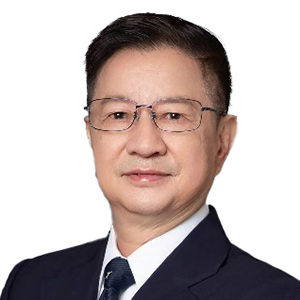
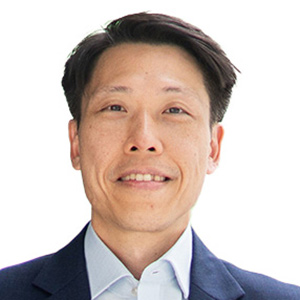
Ir Kenneth Chan is a civil engineer with over 30 years of working experience in bridge design, construction, structural inspection, maintenance and structural health monitoring of highways structures. He has participated in a number of mega-scale projects in Hong Kong, including the construction of Tsing Ma Bridge, Stonecutters Bridge, Tuen Mun Road Widening, Shenzhen Bay Bridge and the Hong Kong-Zhuhai-Macao Bridge. He has played an active role in the design and establishment of the Wind and Structural Health Monitoring System for Tsing Ma Bridge, Kap Shui Mun Bridge, Ting Kau Bridge as well as the Stonecutters Bridge. Ir Kenneth Chan has been elected as a member of the Board of General Executives of the China Civil Engineering Society (Bridges and Structural Engineering) in 2023. He is currently serving as a Principal Project Coordinator at the Hong Kong Highways Department and is responsible for providing technical support related to the design, construction and maintenance of long span bridges, formulating implementation plans and operation strategies for structural monitoring, damage detection and development of advance technologies for bridge structures with participation in a number of research projects in collaboration with universities and academic research teams.

Abstract of Presentation

The Highways Department of Hong Kong has established and operates a series of structural health monitoring systems to monitor the structural condition of the five long-span cable-supported bridges in Hong Kong, namely Tsing Ma Bridge, Kap Shui Mun Bridge, Ting Kau Bridge, Stonecutters Bridge, and Shenzhen Bay Bridge. The principal objective of monitoring is to detect and evaluate any signs or tendencies of structural anomalies, deterioration or damage that may adversely affect service or safety reliability of the structures. Data are collected from on-structure instrumentation systems and processed according to the established algorithms related to respective actions, structural response and performance. In parallel, on-site inspection, maintenance, and repairing works are conducted to ensure the structures remain in good and safe condition throughout the designed operational life. Drawing from the past twenty-plus years of operational experience, the monitoring system for Tsing Ma Bridge and Kap Shui Mun Bridge has been upgraded and enhanced recently with the introduction and integration of advanced monitoring, data transmission, and structural evaluation technologies to meet contemporary needs in bridge operation and maintenance. The presentation will focus on the application and development of structural health monitoring and inspection technique for long-span bridges in Hong Kong, with highlight on a number of enhanced functions, including ship impact alarm system, digital twin for traffic load and fatigue damage assessment as well as the adoption of SUA and robotic device for inspection.

Mr WANG Shilin

Senior Technical Director
Shanghai Municipal Engineering Design Institute (Group) Co., Ltd (SMEDI)
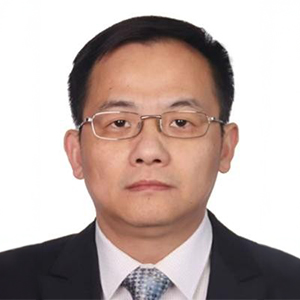
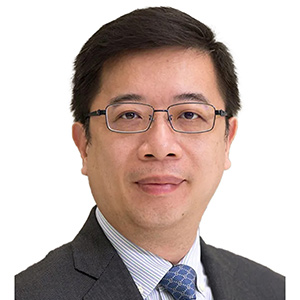
Wang Shilin, National Engineering Survey and Design Master, Professor-level Senior Engineer and Senior Technical Director of SMEDI, is a leading authority in China’s transportation sector with 30+ years of expertise. Renowned for directing landmark projects such as Shanghai’s Hu-Hang Expressway, Middle Ring Road, South Railway Station Municipal Works, and Nanjing South Railway Station Transport Hub, he has shaped critical urban and intercity infrastructure. A pioneer in automotive R&D, he designed China’s first passenger vehicle testing grounds (Shanghai Volkswagen/GM), advancing domestic automotive innovation. Awarded the State Council Special Allowance, his honors include the Zhan Tianyou Award, National Silver Prize for Engineering Design, and provincial Science & Technology Progress Awards. He co-authored 3 monographs, published influential papers, holds multiple patents, and contributed to national industry standards. His transformative work in transportation planning and automotive testing has driven technological progress, cementing his legacy as an academic and engineering leader.

Abstract of Presentation

This presentation investigates the evolution and design strategies of road access and distribution systems in large-scale railway hub stations in China. It systematically reviews current development patterns and emphasizes core planning principles, including functional zoning, traffic flow management, circulation system design, and multimodal integration. Through detailed analysis of key elements and representative case studies, the presentation explores practical implementation outcomes and operational effectiveness. The objective is to provide insights into optimizing hub efficiency and advancing the coordinated development of urban transportation systems and regional connectivity.

Ir Henry CHEUNG

Chairman
Association of Hong Kong Railway Transport Professional

Henry was an Engineering Science graduate of the University of Toronto in Canada, and Business School of Deakin University in Melbourne, Australia. He is a Fellow of the IRSE, IET, HKIE and Senior Member of the IEEE.

Henry has 35+ years’ experience in the railway industry in various capacities, and delivered railway systems around the world and was the head of MNC's Hong Kong operations. He is now an independent consultant.

Henry has served in many professional institutions, is a board member to various government advisory panels and NGO, and is a lecturer for post-graduate level railway engineering courses.

Ir Rupert LEUNG

Vice President
The Hong Kong Institution of Engineers

Ir Rupert Leung, Vice President of the Hong Kong Institution of Engineers, is a civil and geotechnical engineer by background. Over his career of three decades, he has been involved in rail and transport infrastructure development in various geographic locations including Hong Kong, mainland China, Taiwan, Southeast Asia, Australia, and the Middle East. He has contributed to the development MTR Tseung Kwan O Line, West Rail, Dubai Metro, Taiwan High Speed Rail, Express Rail Link Hong Kong Section, Kwun Tong Line Extension, and most recently the cross harbour tunnels of Shatin to Central Link, leading the design for construction. He is currently serving as the Senior Director of Operations of Halcrow China Limited.

Mr WANG Shuiyin

Vice President
Research Institute of Highway Ministry of Transport

Only Chinese available

汪水銀,現任中華人民共和國交通運輸部公路科學研究院副院長。長期在交通運輸部科技司開展交通運輸行業科技創新戰略、規劃、政策研究制定工作,聚焦于交通科技創新,涉及國家級科研平臺建設、關鍵技術攻關及成果産業化,尤其在交通强國戰略實施中發揮了重要作用。謀劃實施了交通運輸部「智能建造先導應用試點」。

Abstract of Presentation

公路智慧與綠色建造是推動行業高質量發展的核心動力。在政策引領下,我國已構建標準體系,設計數字化、建造智能化、養護智慧化顯著提升了公路建養的效率與質量;生態設計、低碳施工及綠色養護的實踐促進了公路與自然和諧共生。未來公路需强化頂層設計,驅動技術創新,深化多方聯合攻關,加速智慧與綠色建造協同,爲公路行業高質量發展注入新動能。